A Crisis of Confidence

I don’t think there’s a parent alive who has never had a crisis of confidence at one point or another. There’s definitely never been a home educator who hasn’t had a crisis of confidence in home educating at some point (colloquially called “the wobbles” in the home ed circuit). An element of humility is of course essential in life, even more so when dealing with young, unpredictable, chaotic little people. But when those crises of confidence hit, it can be crushing.

If you’re new here, (hi!) I’m Emma, mum to 3 wonderful children aged 7, 5 and 5, who are all autistic. We are “currently” home educating all three as mainstream school did not work for them and we are waiting for the right school placements. The quotation marks are because “currently” implies that you may do something different in the future, and that is the hope. But it is becoming increasingly apparent that, because of the long waitlist for basically every single special school in the country, there is a chance that we could be home educating for a few more years yet and, with the possible SEND reforms coming in, our children may not qualify for a special school in the future.

It was not initially the plan to home educate. It then became the plan to home educate for the interim until special school places were found. That is still the plan but, where we thought it may be for a year or two, we’re potentially looking at many more years of home educating. THIS was not the plan. I look around at our life and our attempts to home educate and the crisis of confidence hits. This isn’t sustainable. It’s not sustainable now and it definitely won’t be for years on end. But currently, there is no other option, and therein lies the panic.

It’s not just the fact that being around your kids 24/7 is A LOT. It’s also that I worry I’m not doing enough. All. The. Time. Our kids all run a mile from any kind of formal learning and they won’t do anything unless they see a purpose for it (e.g. I tried to get the girls to try to write their names in the early days and they refused as there was no point to it, apart from practising writing their names). This means we have to be creative and crafty at sneaking in elements of the education we want to (and feel like we should) give them.

What does this look like? It looks like jumping on their special interests and providing them with resources to explore them more (like books, toys, videos, crafts etc). It does not look like sitting down at a table going through a workbook. So I’m sure, to some, it looks like we’re doing “nothing”, and certainly when I try to explain our methods, it can definitely feel like it’s not enough. But you try your hardest with what you’re given and hope that the tiny moments of… “Oh look, you have three lions, how many do you have if we add one more?” and “Would you like to write a story about a Compsognathus on Minecraft?” will teach the kids the basic numeracy and literacy skills they need.

It never feels like enough, and I can get so frustrated when any attempts at formal learning get shouted out. It also doesn’t help that social media (including the home ed community) has so many ✨ opinions ✨ on education and schooling. Even other home educators would tell me I’m not doing enough, and others would encourage me to “just let them play!” (which I often end up doing). It’s rare you’ll find another person who does it exactly how you do it. And that’s probably a good thing, as every child is individual and has individual needs. But it can make it feel like a lonely place.

Another place where I have been having frequent crises of confidence recently is in parenting. Like I said before, this is a really normal thing, but when you have kids with SEND and are therefore possibly parenting differently to the mainstream, the crises come in thick and fast. We’re still having issues with toileting, which is a phase of parenting I thought we’d be through by now. Also one kid in particular was limiting their already very limited diet so it was not including any fruit or vegetables at all. Obviously one of the most fundamental parts of being a parent is feeding your children in a way they can be healthy. For a while, we were up against a barrier that felt impossible to overcome. Thankfully, they will now eat strawberries and baked beans alongside their other beige foods, but still, that’s it.

We are thankfully having some help from an OT (occupational therapist) who has been coming to our house each week to help with emotional regulation strategies, eating, toileting, sleeping etc. She’s wonderful and does an amazing job, but whenever we try to implement the strategies she suggests, we are often greeted with shouting, tears and flat out refusal. We are pretty sure the twins have a PDA profile (Pathological Demand Avoidance or Persistent Drive for Autonomy if you want it to sound less murder-y). This means that any request for them to do anything has to be phrased delicately, or they simply won’t do it. Or, they will have an explosive meltdown. The fact that they do not respond in the way the OT is suggesting they should/will can just make you think “Am I doing this all wrong? Is it actually that I’m just really bad at this?” or, even more damning, “Has the way we’ve parented them made them like this? Is this all our fault?” And what doesn’t help is that there will be people (possibly even some of you reading this) that will say “Yes. It is actually your fault.” since we do not parent in a mainstream way. We try to be as low demand as possible, we do not limit screen time at all, they are allowed to eat their dinner on the floor, they are allowed to just wear pants all day and they will not be told off for having big feelings. Obviously these are small examples but there is an undercurrent of us not expecting our children to do things we do not feel they are able to do and we are happy for them to do the things they need to to be able to cope in this world.

I’m not writing this in the hope that I’ll be met with a chorus of “You’re a great mum! You’re doing a great job!” because, honestly, unless you’re with us every single second of every day, you have no idea. I’m writing it to hopefully offer solidarity and comfort to those other parents who may also frequently have crises of confidence. I try to hold onto the idea that a crisis in confidence is there to teach us something. That maybe we need to rethink how we are doing something, or our perspective on something. Maybe, yes, there is something you could be doing better. Or (and this is most likely the case), could it be that your expectations of yourself and your kids could do with being lowered. Then lowered again. And again.

I don’t know. I’m in the middle of it all now and it’s not easy. But when I do feel the wobbles in home educating and parenting, I try to remind myself that there is no lack of love, affection, laughter, play, silliness, creativity or inquisitiveness in our home. And that is a good place to be.
Hello 2026

Welcome to the first blog post of 2026!

It’s been a bit of a rough start to the year, with first me and then my husband, Sam, coming down with the awful cold virus that’s been doing the rounds. It knocked us both out for about two weeks each and Sam’s not 100% yet, but thankfully I’m feeling much better.

It’s also been a very busy start to the year, which after the busyness of Christmas has been a bit rough! Within a few weeks the twins have had assessments done by an occupational therapist, educational psychologist and a speech and language therapist. Our son has also had an OT assessment himself, which we’re hoping will be useful in his upcoming EHCP annual review. Lastly, my husband has been away at a clergy conference. Why they decided to hold a conference for clergy so soon after the madness of Christmas is beyond me but there we are.

All of these assessments for the girls have been to provide evidence for their EHCP applications, both the need for them and to suggest the content. The consensus across the assessments appears to be that the twins both need a specialist setting, which is encouraging. However, multiple reports from multiple professionals unfortunately does not guarantee that EHCPs will be issued, let alone that they will state the need for a specialist provision. We will find out if the girls will be issued EHCPs in a few weeks, so watch this space.

It’s hard to describe the conflicting feelings I experience when reading the reports from these assessments. They, rightly, set out the strengths and weaknesses of your child in certain areas and then suggest activities/exercises for you as the parent and/or school to do that will help keep the child regulated and able to learn. It can be difficult to read the things your child struggles with so starkly in black and white, especially when terminology is used that you wouldn’t have used before. The exercises and activities suggested are of course brilliant, but it can be overwhelming to think about how to fit all these extra suggestions into our day when often just getting through a day is enough. As it turns out, all three of our kids need a lot of physical input with lots of movement and heavy pressure. Sitting still on a carpet would never work for them. Running back and forth, climbing all over us and bouncing on a trampoline is where it’s at.

But I am grateful that we have pages of evidence that set out clearly the extra support our girls will need in school. That is still our plan, we feel that all three kids attending a (hopefully the same!) special school would be best for them and us as a family. But obviously, a special school is still a school, where they have been very happy being out of that system by being home educated, so we will see.

There are elements of home education that I love, one being that we are free from the school run, the school avoidance, the school admin, the school uniform and the school expectations. I imagine a specialist provision will be different to mainstream in many ways but also, by its very nature, it will need to be similar in lots of ways too. It may well be that after all the work of trying to secure EHCPs and finding the most perfectly suitable school for the kids, they still don’t want to go, are unhappy and struggling there and we end up bringing them home again. Only time will tell.

Until we get those EHCPs secured and find the perfect school, we’re going to continue home educating. By the end of last year, I felt like a frazzled, exhausted husk of a person. If I’m going to show up as the home educating parent I want to be this year, I need to take better care of myself. So far this year I’ve been trying to eat more “whole foods” (bleugh) and fitting in more “movement” (crying face emoji), but ultimately, I’m trying to swing the 80/20% balance I’m currently in to the healthier version, if you get my drift. But I still love me a Domino’s and a chocolate cookie. Saying that, discovering Dance Fit has been a bit of a revelation as I get to dance like I’m in a music video and since most of the lights are off and I’m behind the front couple of rows, I can almost believe I look like I should be in a music video too. Just don’t turn the lights back on.

So come along with us this year as we try to keep three autistic kids regulated, happy, fed, watered, clean and also, I guess, educated, whilst trying to stay regulated and sane ourselves. It’s going to be an adventure, for sure.

I like this quote from Elisabeth Elliott,

“Sometimes life is so hard you can only do the next thing. Whatever that is just do the next thing. God will meet you there.”

Words to live by.

Everything Everywhere All at Once

Tomorrow marks a full month since we took the girls out of school. When people ask me how home educating is going, I often say “better than I thought it would!” Admittedly, I was expecting it to be a dumpster fire having three autistic kids home all the time, so anything is better than that, but we’ve been wonderfully surprised by how it’s gone so far.

The most important difference is seeing the change in the girls. Out of school they can be their full, glorious, unmasked selves. Occasionally that looks like spending entire days at home in their pants. It had gotten to such a bad point in school that we were genuinely worried for the girls’ mental health if they were to continue going. So to see them so joyful, so freely expressing themselves and so inquisitive is a delight. I must acknowledge that I’m aware of our immense privilege in being able to take the girls out of school since I don’t work. For other families, their children have to stay in a place they feel unsafe because their parents are unable to give up work to bring them home. So I’m grateful we had that option.

I had assumed that the girls would be more interested in “formal” learning like worksheets. However, it quickly became apparent that a request for the girls to write or read something would lead to either a very silly response or a meltdown. We believe they may have some struggles in that area anyway so we’re easing off any pressure to write and read. After all, the girls are only four!

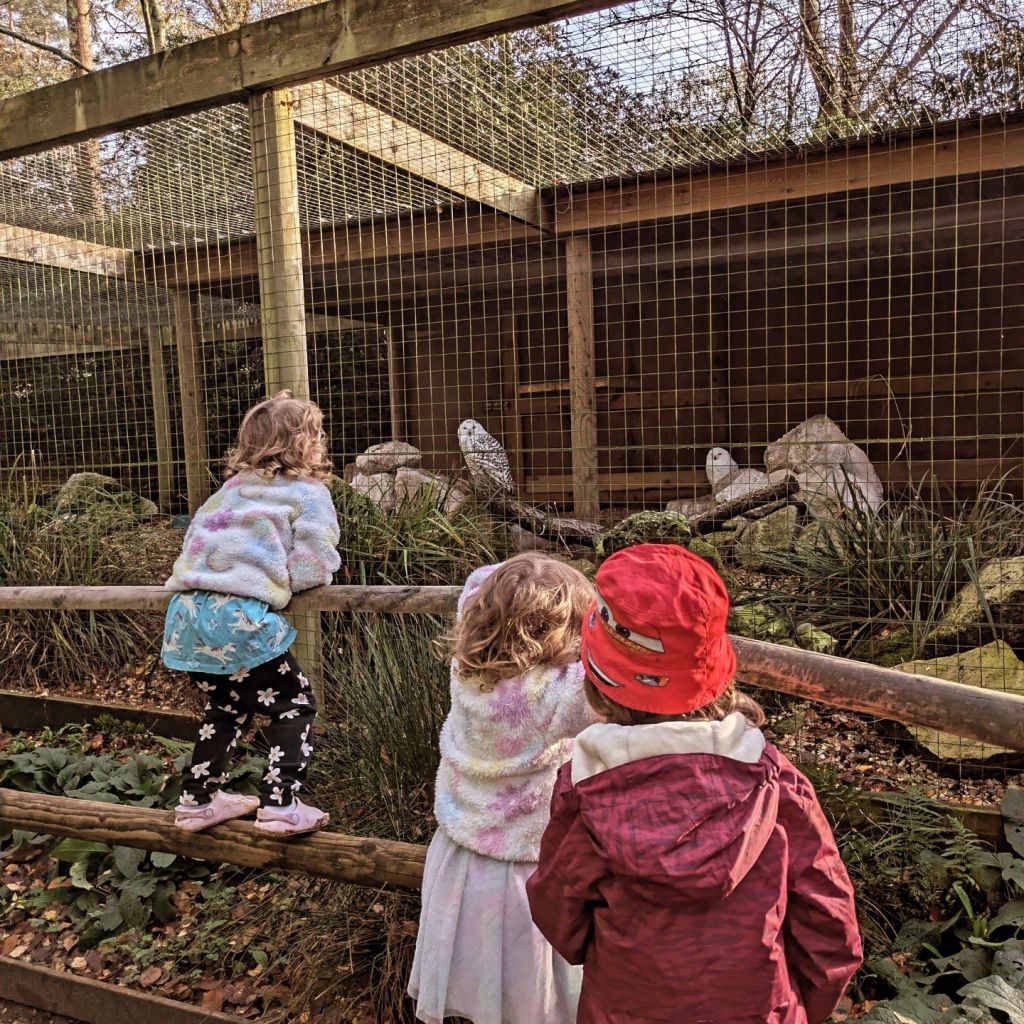
So what does home education look like for us as a family? It looks like trips to the aquarium and the wildlife park; time spent in the library reading books and playing games; listening to podcasts about our favourite animals on car journeys; playing with kinetic sand, play dough and slime; hunting for mushrooms and bugs outside; asking Google hundreds of questions and lots and lots of time on screens. The kids love to learn and they do it in their own way. We are just learning how to sit back and let them. And also doing all the Googling.

A really big benefit of bringing the girls home that we did not see coming is the effect it’s had on our son. We had assumed that he would find having the girls home all the time really difficult, and sometimes it can get a bit too much for him. However, he now has two play mates he loves to play with, watch videos with and make things with. Whereas before he would spend the entire day playing on Minecraft, he is now showing interest in long-forgotten toys and books, even having a read by himself at times. Clearly his sisters are much more fun than his mum so provide more options of things to do. We’re thrilled he’s enjoying having them around.

Of course, nothing is perfect; I am constantly worrying we’re not doing enough, by 6pm I’m often a shell of a person and I would be overjoyed if someone could take the kids out of the house between the hours of 9 and 3. The days are relentless and often the nights are interrupted too. Occasionally the needs of the three children overlap or conflict or exacerbate each other. Thankfully the girls have been awarded DLA as otherwise our bank account would be empty by Christmas. And, of course, the house is in perpetual chaos.

But… One of the benefits of home education is that we are not limited to the hours of the school day, or even the days of the week. So those days when I’m really not feeling it and the kids are feeling a bit bleugh, we can have a lazy day at home in our pyjamas and I can lie on the sofa reading my book. Inevitably a “super learning day” (a day where we’ve gone out, explored, asked lots of questions and had lots of experiences) will be just around the corner.

Home educating all three kids was always an option hovering on the periphery for us, especially since our son struggled so much in school. However, we are (currently) seeing this as an in between season before we find suitable schools for all three kids. At the moment, that looks like a special school for all three of them, which feels impossible, but a small mainstream might work for the girls.

For now, the kids all love being at home and (for the most part) we love having them home too. It’s such a gift to be able to spend so much of their childhood with them. After all, they will only be this young for a short time. The house can be in order and we can finally have time to ourselves in the future.

… and 2 makes 3

It’s been just over a week since we took the girls out of school. A week since we received the diagnoses we’ve been expecting for years. A week since life as we knew it had to change, for the sake of our kids’ mental health.

I’m not going to lie, I’m very tired. But I’m also cautiously optimistic and excited for what is to come.

Yes we have yet to start the soul destroying process of applying for the EHCPs the girls need to help them thrive in education.

But, also a week ago, we received the fantastic and mind boggling news that we no longer have to go to tribunal for our son’s EHCP, it has been updated to “specialist”. Praise God!

So in a way it also feels like we’re one down, two to go again.

Will we find three specialist school places in the same school in the future? Only time will tell.

But God is faithful, we are still seeing through the heart ache. God is providing for us, God is sustaining us even when we feel like we have nothing left.

We know good is coming, because He is good, and good is here right now.

So thank you to all of you who have been following us on our journey. I hope to have the time and energy to write more as we go on.

For right now, I’m going to cuddle my kids and thank God for who He created them to be.

Ask for Help

Before I start… let’s all just get one thing straight. Adult life is, at the baseline, objectively hard. Whether you’re single or married, whether you have kids or not, whether you are working or not. Adult life comes with many different challenges and everyone has things that they find hard. Let’s just agree with that.

As we’re entering a new academic year, and this year we’re going to be settling two anxious girlies into school for the first time, I thought I’d share with you things that we do that help make our life feel a little less crazy and a little more manageable with the challenges that we have.

Some of what I share may seem obscenely privileged to you and other things may seem basic and obvious. Just take what is good for you and leave the rest. The thing I’m trying to do here is to give you permission to make life easier for yourself. Of course, you don’t need permission really, but I’m here giving it.

  • Grocery delivery

Before our recent holiday, we took the kids to big Asda, chucked the twins in the trolley and did a big shop. Our 7 year old son found the environment incredibly overwhelming so asked to be carried most of the time, which limited my husband’s ability to grab things to chuck in the trolley. As I pushed the trolley (with two 4 year olds in), it gradually got heavier and heavier with all the shopping until I was having to use my full body to push it round corners!! Needless to say, we normally stick to online grocery deliveries. Navigating big shops is just a no go for us right now.

  • Hello Fresh

Getting sent the ingredients and recipes for three grown up, nutritious meals each week has been a game changer for us as we were sick of just eating the three meals the kids will eat. Get yourself a husband who will cook them for you and you’re in for the win.

  • Cleaner fortnightly

Once we got a cleaner, I knew we would never go back! We had a break from having one for a few months and I noticed how the house slowly declined as I just don’t have the time, energy or inclination to clean. If you can afford it, go for it!

  • Washing weekly

When we weren’t having a cleaner, I enlisted the help of a wonderful lady who took some of our washing away, cleaned it, dried it and returned it beautifully folded a few days later. Her help was so valuable and reasonably priced that we’ve kept her on. Some weeks I just chuck her the last little bits that I haven’t got to, sometimes she gets all of our grown up clothes when I’ve spent all week washing the kids’ clothes and sometimes she gets sheets and towels. Outsourcing at its finest 👍🏻.

  • Refills

This is good for the environment and I’ve found it’s good for us too. Instead of buying hand wash, shampoo, conditioner and body wash regularly, we buy them in huge bottles and refill the smaller bottles we already had. We use Miniml and I find it to be really reasonably priced and great quality. Just knowing that we always have some (I buy more every 6 months or so) is one weight off my mind. Buying in bulk in general is a good idea.

  • Sharing and asking for help

I am by nature a bit of an oversharer (can you tell by this blog?) but I really find it helpful to share stresses and problems I’m having and asking for advice or prayer. Whether it’s on a Facebook group of like minded people in the same situation or in a WhatsApp message to some Christian friends, for me, sharing really does lessen the load. Plus, when I’m fresh out of ideas and do not have the mental energy to figure something out, it’s often helpful to get different perspectives on our situation.

  • Pray

I believe in a God who is able, always listening and always present. So, even when I’m in the middle of chaos, I often pause, open up my hands and just say “help me”. Sometimes that’s all that’s necessary for me to experience a tiny bit more peace in that moment. Other times I bring him monologues asking for his help in different areas of my life and, even though I don’t get an “I’ve got it” response, I believe and trust that he has heard me and he is always working, even when I can’t feel it or see it.

So there you go! There is no shame at all in asking for help, even if you feel you don’t “need” it. If anything, now is a good time to get it as there will inevitably come a time you suddenly could do with the extra help. Unfortunately one of the big challenges of adulthood is that no one is going to swoop in to help you and take away all your problems (even Jesus, he promises to be with us in the mess, not that there won’t be any mess). If you need help, you have to ask for it.

We need each other. Whether you pay for it with money, chocolate or effusive thanks, it’s always worth exploring.

What help do you have that makes your life easier?

Welcome to Holland

It can be really hard to explain your life to someone who isn’t living it. You can find yourself trying to justify things that really you have no need to justify, the conversation can just veer that way. Maybe their face is taking on a quizzical expression, or they’re asking questions that show you they really don’t understand.

It’s even harder when you’re living even slightly out of the mainstream. Take screens for example. Oh the noise around screens and how they’re destroying our children’s brains, halting their development and turning them into monsters. What do we think we’re doing not putting any restrictions in place? Why do we let them have screens at mealtimes or when we’re out and about? We can explain until we’re blue in the face about how screens help our children regulate and how it’s necessary for them to escape into a screen when the outside world gets too overwhelming for them. But still it’s hard to not feel judgement, not to question “are we bad parents?” for allowing this. Even though we know we have to do what’s right for our children and ignore what others think, it’s hard.

Then “picky eating”. Our kids would live on sandwiches and fruit if they could. There is a rotation of 2-3 meals we go through that they (or at least 2 out of the 3 of them) will reliably eat. Even then, sometimes they might not eat anything. We’ve tried to introduce new food but either we will get screamed at or it gets thrown on the floor. This is fairly expected for babies and toddlers but when it’s your older-than-preschooler age children, it becomes less so. So I’m grateful for your suggestions of tofu or peas and sweetcorn to get protein into our children. Problem is, they won’t eat them. And when we see parents on social media bemoaning having picky eaters but being able to serve them chicken or spag bol… Well that’s when you realise you’re not only not in the same race, you’re not even on the same field.

Over the next few weeks we have a number of assessments and appointments for the twins so we can figure out how best to support them when they start school. We’ve decided to send them to school in a different town because it is smaller and more nurturing. Like my counsellor said in one of our sessions “it’s not as simple as just sending them to the school down the road!” It’s not. We already know our girls wouldn’t cope there. Now, we are not sure what the assessments are going to conclude, if anything at all and I’m not sure how I’m going to feel whatever the outcome is. It may be a case of “wait and see”, where we’ll wait until they’re older to see if these current struggles are an age and stage thing or a neurodivergence. Or we may get diagnoses. Time will tell.

We’re living our life as if we have 3 ND kids as that’s what it currently feels like. So our life inevitably will look different to yours or to other families you know. I hope that by giving you glimpses into our life you will be able to view other families that do things differently to yours, or to your expectations, with more compassion and grace.

It’s not the life I imagined when we first talked about having children. Every now and then I need to kick myself in the butt to snap me out of self pity or “what could have been”. It’s pointless, fruitless and dismisses the beauty of the life we have. I try to remind myself that some families face hardships beyond what we could imagine. That doesn’t diminish our struggles but it helps put things in perspective.

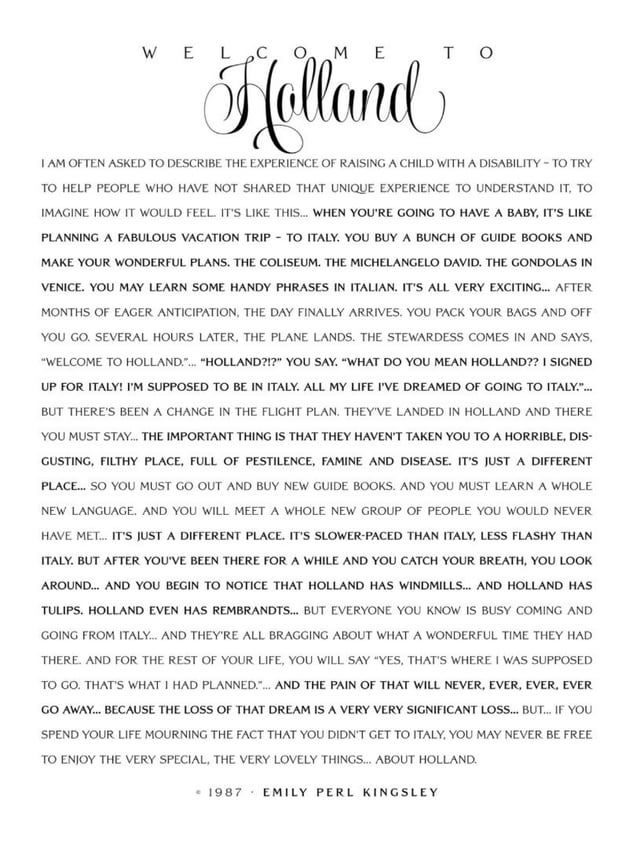
A poem that reflects this tension of living a life you didn’t expect to is “Welcome to Holland” by Emily Perl Kingsley.  I’ve posted it below.

I hope you have the courage and support to live your life how you need to and want to. This world can be so noisy and heavy with assumptions and expectations. But this is your “one wild and precious life” as Mary Oliver says. So live it.

Unschooling

I’d like to talk to you all about unschooling. I have a lot to say, so this is a long one. Grab a cuppa and a cookie.

Now, before we entered the world of home education, if someone had said the word “unschooling” to me, I would have pictured hippies floating about with no rules with the kids running wild and naked through the woods. My opinions were definitely not positive. There had been one of those “Stacey Dooley sleeps over…” episodes about an unschooling family and it largely revolved around the facts that the kids had no set bedtime or mealtimes and the elder boy (I think he was 8 or 9) couldn’t yet read or write. The parents practiced child led parenting, perhaps to an extent that is unusual. They were portrayed as extreme,  irresponsible and, basically, bad parents.

If you have read any of my other blog posts, or talked to us in person, you will know that we came to home education very reluctantly. In case you’re new here (hi ☺️), this is the story in a nutshell: we, and several educational professionals, believe that a special school is the most appropriate school for our autistic 6 year old son. The LA disagrees. All but one mainstream school said they cannot support his needs and there are no spaces in special schools anyway. Hence, home education.

To get started, I found tonnes of resources. I scoured Vinted for workbooks, got a Twinkl subscription (which has actually been fab), found fun activities, planned weeks ahead and researched for hours how to educate at home. We also got a tutor (provided by the LA) who was due to come 10 hours a week. And our son didn’t want to do any of it. What I was dreading would happen happened and he just wanted to stay in his room watching videos all day and never wanted to leave the house.

This is apparently very common at the beginning of home education (if a child has previously been in school) and it is necessary for both parents and children to go through a process of “deschooling”, basically moving away from the idea of what you think education should look like. For me, I was picturing our son completing worksheets and reading, so long as he was able to jump up and run around when needed. Whilst I wasn’t planning on replicating school at home, I definitely had an idea of how Caleb should learn, and I planned to include all the movement and sensory breaks his heart desired. But it wasn’t enough.

For weeks our son was highly dysregulated and could barely be in the same room as the tutor for 5 minutes before running upstairs. We had thought keeping him home from school would magically make him into a calm, stable, happy little child but of course it wasn’t that simple.

After steadily cutting the time the tutor came in over a week we decided to pull everything right back and only had her come in one morning a week for a couple of hours. Our son was also attending a fantastic alternative provision (where he was the only child) once a week for a couple of hours, which we were able to leave him at. After several weeks of settling in, being unable to do a full session because he was so tired, another child joined and finally he was able to cope with a full session because the attention wasn’t all on him.

In our attempts to help make our little boy feel safer and happier, we pulled back entirely and decided to just let him do what he wanted while he was at home. For a while, that was just watching videos and playing with his toys. Occasionally we could manage a trip to the park or beach and things started to feel a bit calmer.

Then we noticed something happening. Our son was watching lots of videos, often songs, about the human body. Sensing it was something he found interesting, we provided him with some books and very simple activities, such as labelling different parts of the body (think head, arm, leg). But then we noticed that our son was talking more about internal organs and the digestive system and the pyloric sphincter. We were suddenly learning things from him that we had never known before! His brain was soaking up all these facts like a sponge and he was able to recall information that was far beyond his years.

So we fully dived in with him and our lives became absorbed with learning about the human body. Now he wasn’t just watching videos, he was also reading kids textbooks and examining diagrams and making human organs out of play dough. It all came from him and we just hopped on for the ride, slipping him more resources and activities when we found them.

Thankfully, when we felt like we had truly learned all we ever needed or wanted to know about the human body, a new topic of interest emerged. The American states. Then maps. A brief foray into space. Until we landed where we are now, in countries of the world.

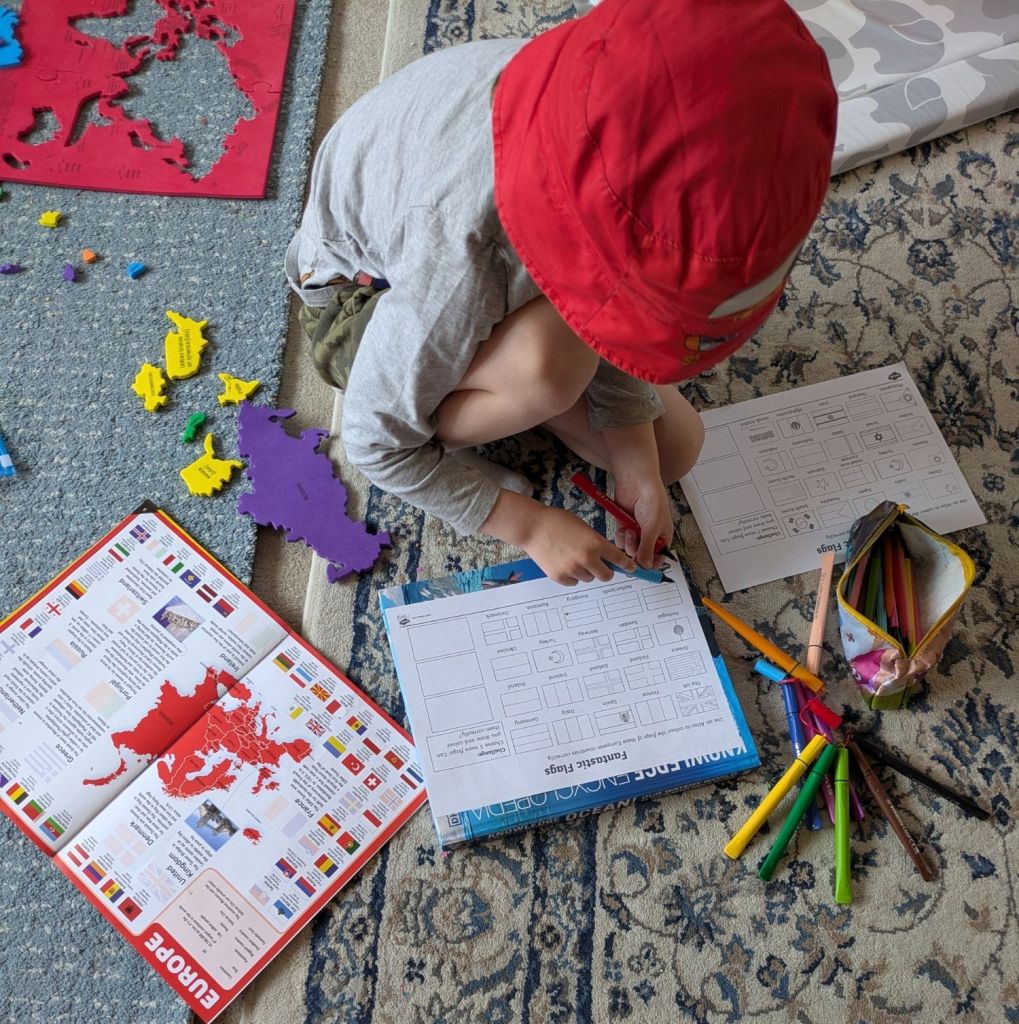
Now that I’ve got my bearings a bit more, I’m more able to think of ways to expand and facilitate his learning (for example when learning about the USA states, I found the flag for each state and we would match them with the maps Sam and I had meticulously drawn). So since we’re on the countries of the world, I’ve been printing out flags for us to colour and found puzzles where each piece is in the shape of a country, so he can literally make the world. A lot of the learning he does is very tactile, he constantly asks us to draw countries/regions/counties, so he can put together continents/countries or states. If I never had to draw the outline of a county of an American state again, I would be a happy girl. He will make countries or states out of play dough, and stick a pair of googly eyes on them for comedic effect.

This is unschooling. Our son decides what he wants to learn, how he wants to learn about it and when he wants to move onto something else, be it a new topic, a new activity or going outside to bounce on the trampoline. He dives deep into his interests in a way that would just be impossible in a school environment, mainstream or otherwise. For him, there is now no separation between learning and play. He learns through play and plays with learning. Whilst we can find this exhausting as there is no “off time” from education, he is just thriving.

Of course, unschooling is not a perfect solution and there are many challenges to it. I have found it really difficult not having any control over what our son’s learning and I worry about his reluctance to handwrite or read fiction. We haven’t done any kind of maths in months and whilst he can read well, he struggles with comprehension. The lack of time alone, isolation and relentlessness of home education has taken a real toll on my mental health. I find it so overwhelming a lot of the time and we haven’t found a local home ed community to build relationships with, so it’s very isolating.

Whilst our son is really enjoying his time at home, he still struggles with things like sensory overload and emotional regulation, especially when he’s tired. Whilst we have removed a lot of demands from him by keeping him out of school, we can’t protect him from everything, especially not his whirlwind twin sisters.

At the moment, our plan is still to send our son to a special school once his EHCP has been updated (currently in the tribunal process) and once a special school place is available (they are like gold dust). Therefore, we are probably looking at continuing with our home education, unschooling, journey for at least the next year. Whilst this thought occasionally fills me with dread, I’m also intrigued and excited to see what topic our son chooses to dive into next. I’ve been asked whether we have any influence in his choices and the truth is, we really don’t, it’s a surprise to us too!

So we’ll just join in wherever he goes and hope that it involves less of us having to draw things.

Fighting the fight

We have been fighting a number of battles in the Dinsmore household recently. We’ve found ourselves tangled up in the bureaucracy that governs the systems and organisations that are meant to support us.

From the Local Authority being able to change something at the click of a button which we then need to go to literal court to get changed back (tribunal date is March next year).

To the council needing proof of something it’s nearly impossible to prove to prevent them from slapping us with an eye watering fine.

From losing the funding we had for our son’s alternative provision, meaning we are having to bear the expense ourselves.

To the twins now being at the beginning of what is currently a predicted three year wait for autism assessments.

Not forgetting our government, who we had such high hopes for, that insists on taking from the most vulnerable instead of taxing the rich like an absurd reverse Robin Hood.

And there’s even more I can’t get into here.

Life is challenging. It is for everyone, of course. But it seems those individuals and families who need the most support are hit with more challenges and ridiculous hoops they need to jump through just to get by. We are by no means the most affected by this. We are privileged to have other options, which so many families don’t have. But it is still very real in our day to day life.

Of course the real victims in this mess are the children. These kids who need extra help to access the things most kids find easy. The kids for whom there are barriers put there by higher authorities who have never met them, who don’t know the incredible little people they are.

So as parents, we fight for them. We go to the tribunals; we fill out the lengthy forms; we become “those parents”, emailing daily just to get heard. We push for assessments, we research, we argue. We take on the fight our children are too little to bear and we do it with tired bodies and tired minds, but we do it.

At times we have felt abandoned by everything that is there to help us, including our Heavenly Father. But I know that God isn’t offended by this. He can take our ranting and raving at him. Our demands that he tells us exactly what he’s playing at. Our questions of where he is in this, or if he’s even there at all.

“Therefore we do not lose heart. Though outwardly we are wasting away, yet inwardly we are being renewed day by day. For our light and momentary troubles are achieving for us an eternal glory that far outweighs them all.”- 2 Corinthians 4:16-17

Most days our troubles feel neither light nor momentary. They feel heavy and endless. But as Christians we have hope that there is something so much greater coming. I believe that both in this life and the next, God has something great for us. And, as one of my favourite writers and podcasters Kendra Adachi says, “Good is here right now”.

So I’m going to climb off my soapbox now, go and grab myself a can of Diet Pepsi and give my boy a cuddle. I will find joy in these glimmers and draw strength from them to keep fighting the fight.

Onwards.

Church

I had visions of my family in church, how it would be. The vicar’s kids running riot, owning the place, feeling at home under stained windows, altars and band equipment.
Known so well and so part of the church family as to have honorary grandparents, aunts, uncles and cousins.


But church was too noisy and people too nosey and I couldn’t be in the main church anyway.
Hiding in side rooms, my kids shouting at me when I tried to sing and unable to hear the preacher.
I reached the conclusion, I’m shamed to admit, that I just couldn’t do it, it wasn’t worth it for me or my family.


So church looks different to me now.
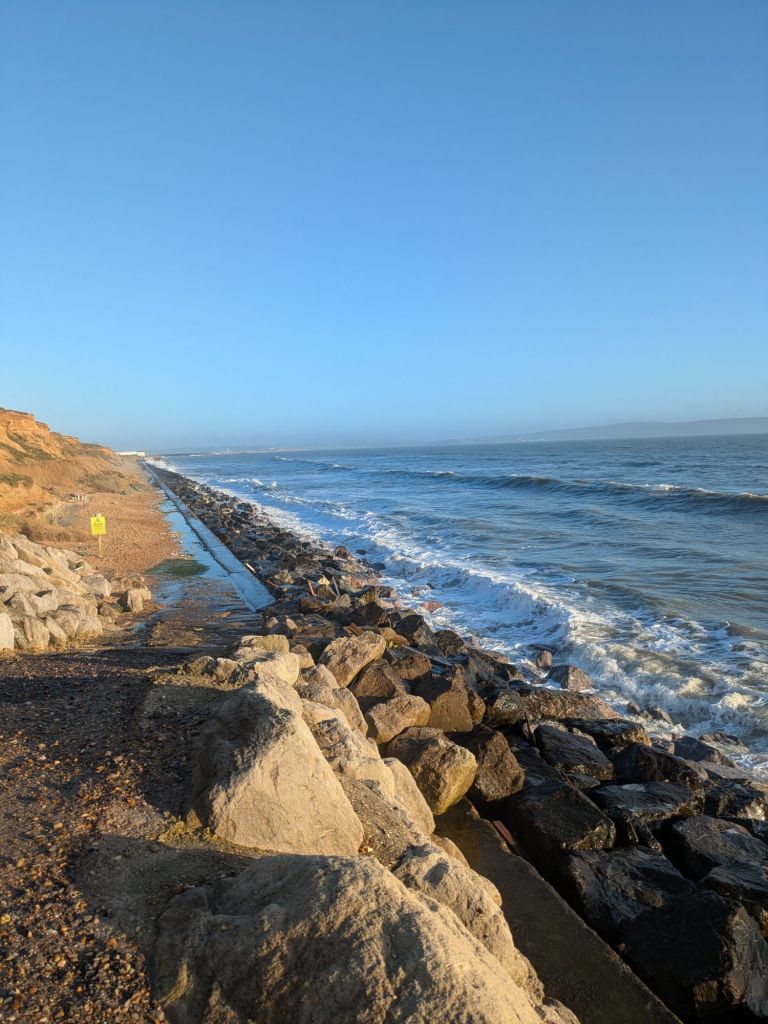
It’s stomping the coastal path with worship music full volume, watching the crashing waves, reminding me there’s something bigger, more powerful, greater than it all.
It’s a small group Bible study with mixed ages and stages, seeking the same thing, grappling with the Word, sharing the burdens of life.
It’s late at night with my journal, pouring out my woes and stress, looping back round to gratitude every time.


Finding God in the strangest of places, finding communion through my phone.
Worship songs in my kitchen, making sandwiches with small hands pulling at me.
It’s that friend who prophesies over me, that other friend who always prays, that friend who gets it, truly gets it and walks it with me.


I hope one day there’ll be a place that we can all be together.
But for now I’m meeting with God in the church all around me, my home, outside and within.

Closing the door on 2024

Writing a blog post or something similar at the end of a year is a habit I’ve got into in the last few years. It helps me process what’s behind and dream about what’s ahead.

I feel like I say this every year, but this year has been a big one for our family with a lot of changes. Headlines of course are moving to the seaside and diving into the world of home education.

Absolutely nothing has gone as we thought it would. We have had to pivot, to lower and change expectations, to drastically adapt our lifestyle and to push back frequently against a system that seems catastrophically flawed.

I’m entering into 2025 pretty beaten up if I’m honest. It’s been a tough one where my limits, my abilities and my character have felt continually tested. There’s no doubt that I’ve surprised myself in areas, but in others I’ve felt like I’ve failed.

It’s been a year of feeling pretty out of control. I know and trust that God is a good God who loves us and has it all in hand, but that hasn’t stopped me from screaming into the abyss “what are you doing??”

I’m ready to head into a new year with a new perspective and a renewed purpose. I’ve seen what we’re capable of when the rug is pulled out from underneath us and I’ve seen the faithfulness of God again and again through it all.

Instead of writing a list of new year’s resolutions, I’ve decided to assign the word “intentional” to the year. Instead of letting life just happen, I want to try to be intentional in all I do, as much as I can. That encompasses everything from spending time with God, choosing what food I eat, time with the kids and our finances. I’m obviously hoping this intentionality will lead to positive results but I’m trying to avoid that being my goal. It is the intentionality and mindset that I want to work on.

How has this year been for you? Do you have a word you would choose for the next year?

Wishing you many blessings and much joy in 2025.